
In an interview with Infobae, the Argentine pediatrician who played a central role in the local trial of the Pfizer vaccine -together with Fernando Polack- faces a new challenge: he will lead Phase III of the plant-based vaccine in Argentina, developed by the Canadian laboratory Medicago and the English giant Glaxo (GSK). Details of the novel formulation
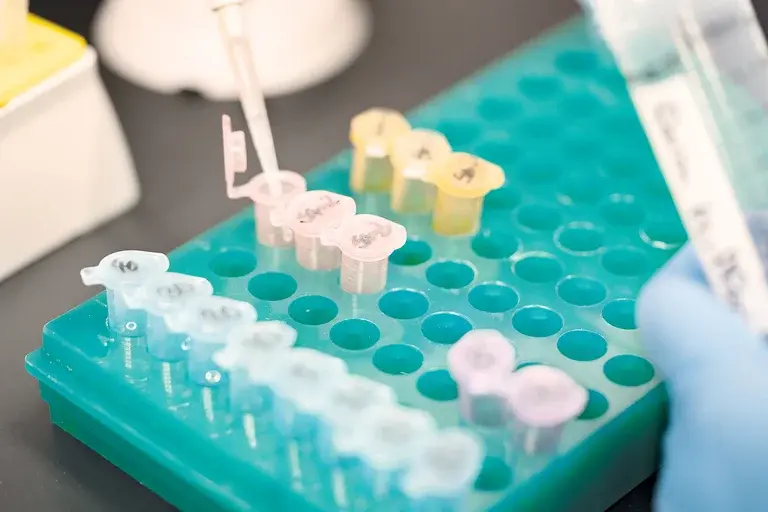
As a virulent second wave of the COVID-19 pandemic hits Argentina and is inscribed in a dramatic context linked to the scarcity of access to vaccines and to a national vaccination system that does not abandon its sluggish paceIn the case of the vaccine, the National Administration of Medicines, Foods and Medical Technology (ANMAT) approved the local Phase III trial trial of a novel formulation from the Canadian laboratory Medicago. Undoubtedly, marking a horizon of hope.
The Quebec-based biopharmaceutical company Medicago, in partnership with the British giant GlaxoSmithKline (GSK) announced to the world last Tuesday the positive interim results (Phase II) for its candidate vaccine against the SARS-CoV-2 coronavirus. Both companies expressed optimism that their innovative formulation will add value in the global fight against the pandemic. This scientific project will count on a brilliant Argentinean mind, and that will be pediatrician Gonz pediatrician Gonzalo Peréz Marc; who at this stage has proven to be passionate about the challenges posed by science.
Pérez Marc was together with the renowned infectious disease physician Fernando Polack, researcher of the largest clinical trial in the world -also conducted at the Military Hospital of the City of Buenos Aires- which served to successfully demonstrate the efficacy and safety of the Pfizer-Biontech vaccine against COVID-19. . He also participated as a scientist in the work on the value of plasma from convalescent patients in the first three days after infection, also together with Polack and Polack and Romina Libster, members of the the FInfant Foundation. Undoubtedly, two mega-studies of crucial importance for the control of the global pandemic against COVID-19.
Nathalie Landry, executive vice president of scientific and medical affairs of Medicago Medicagosaid that after two dosesthe candidate vaccine "induced strong cellular and neutralizing antibody immune responses in all subjects, irrespective of age." Infobae spoke with the Argentine medical researcher Argentine medical researcher Perez Marc, who spoke about the Phase III clinical trial of the vaccine of the Canadian biopharmaceutical company Medicagoin association with the British company GlaxoSmithKline and also explained what the novel plant-based formulation consists of.
"The expectations are very good. It is a vaccine that in Phase II has shown a very good safety profile and a very good generation of both antibodies and cellular immunity, the other fundamental immune line for protection against diseases," said the director of the Maternal and Infant Department of the Maternal and Infant Department of the Central Military Hospital.
The global Phase III trial of the of the Medicago-GSK Medicago-GSK vaccine trial was launched on Sunday, March 16 with participants from Canada, the United States, the United Kingdom and Brazil. Through six medical centers Argentina will recruit around 5,000 volunteers who must be between 18 and 59 years old, not have had coronavirus, not have received another vaccine or been part of another clinical trial, and may or may not have other underlying diseases or comorbidities.
Half will receive the doses and half will receive the placebo (then, if Phase III is approved, all will receive their immunization). Among the six medical centers that will recruit the volunteers, are the Central Military Hospital, the same one that conducted the world's leading Phase III Pfizer/BioNTech Pfizer/BioNTech.
Here it is worthwhile to delve into the innovative formulation of this vaccine. Like most vaccines licensed under emergency mechanisms, requires two applications at an interval of three weeks. However, the new candidate vaccine against COVID-19 is based on a different technology than that employed by other vaccines: it uses live plants as bioreactors to reproduce a non-infectious particle that mimics the target virus. particle that mimics the virus to be neutralized. It is a pure plant-derived vaccine, combined with the pandemic adjuvant produced by GSK.
These particles are referred to as "virus-like particles" (VLP), virus like particle). Medicago, the Canadian pharmaceutical company, is a pioneer in plant-derived therapies and, on this occasion, is using Nicotiana benthamiana plants, which is the most widely used experimental host in plant virology..
"It uses a particle that is similar to the virus but does not contain the virus and, therefore, neither the ability to infect. It is It is a vaccine synthesized on the basis of a plant, nicotiana benthamiana, from the introduction into it of the DNA of the S protein of the SARS-CoV-2 spike. This plant has the capacity to produce and express this viral protein in the form of a particle in whose membrane the S proteins are grouped in the form of trimers (groups of 3), exactly as in the SARS-CoV-2 spike. (groups of 3), exactly as SARS-CoV-2 does. This allows the vaccinated person's body to identify the particle and generate an excellent immune response," he said, said the expert told Infobae.
Importantly, vaccines can be stored in refrigerators, which could be key for developing countries that do not have the resources to store doses that must be kept at ultra-cold temperatures.
- How is the trial conducted, who are its members, where does it take place?
- The Phase II study was conducted in the United States and Canada. Now, Phase III is open to some countries in Europe and Latin America. Mainly Brazil and Argentina, and some others as well, I think Colombia and Peru were also going to participate. In Argentina there will be six centers. The biggest one will be at the Hospital Militar Central. I am the principal investigator and the team is the same that led the Pfizer vaccine study. The ANMAT ANMAT has already approved the study here in Argentina some centers are still waiting for approval to conduct the study. We are still enrolling in our web page for any vaccine study that we can do and that we are authorized to do. We have already requested the authorization request to the ANMAT and we are waiting for it to come out in these days.
Two doses are two doses, one on day 0 and one on day 21. And of course the efficacy of the vaccine will be evaluated, seeing how many people become infected in one group, in the placebo group or in the vaccine group, from the week after the second dose.
- How many volunteers participate and what are the requirements?
- The volunteers for Argentina are going to be probably several thousand volunteers; at least 5,000 volunteers, but probably more. This will depend on the possibility of enrollment of the centers. To participate, it is necessary to register in the web page. There you ask some basic confidential questions and read the informed consent and all the rules that involve clinical pharmacological research. Of course, this is for people who have not had COVID-19, since in people who have been infected it is not useful to evaluate a medication that is precisely preventing you from becoming seriously ill.
- When do you think it will be available in the market?
- This will occur when in the interim studies that are carried out, after reaching a certain number of positive cases, it will be evaluated how many were in vaccine and how many were in placebo. Once these results are available, if the vaccine is effective, the company will surely apply for its approval, even if it is an emergency, in the regulatory agencies where it wants to present itself.
The control trial
In the past, the team from the Infant Foundation and the Hospital Militar Central de Buenos Aires, reported the safety and efficacy findings of a Phase II/III global Phase I/II/III trial that evaluated the safety, immunogenicity and efficacy of the of Pfizer and BioNTech's Pfizer and BioNTech vaccine to prevent COVID-19 in persons 16 years of age and older. This dataset and the results of these trials were the basis for an application for authorization for emergency use authorization.
The results of the study of the Pfizer-BioNTech Pfizer-BioNTech vaccine study vaccine study were published in the prestigious New England Journal of Medicine and the name of an Argentine physician headed the publication. Fernando Polack was not alone in convincing Pfizer to carry out the study in Argentina. Doctors who also led the plasma tests worked with him long before the start of the vaccine testing, among them Pérez Marc, whom he considers "the best clinical trialist he ever saw in his life". Now, led by Pérez Marc, Infant's group of scientists will devote themselves to testing the efficacy of the Medicago-GSK plant-based inoculant.
The study conducted at the Palermo Military Hospital -where Polack and his team have already conducted studies for vaccines for other diseases - began on August 6, 2020 and enrolled more than 35,000 volunteers. more than 35,000 volunteers and randomly selected the 5,762 who eventually who ultimately participated in the study were chosen at random. It was a trial "of unprecedented proportions that required extreme professionalism in a work that aroused surprise in the world". The vaccines arrived by plane from the United States with their cold chain controlled, since they must be kept at a temperature of 80 degrees below zero, a condition that was maintained at the Military Hospital.
In order to carry out the study, they worked -as explained by Polack explained to Infobae- more than 1,000 people, including some 500 doctors, 50 nurses, 100 medical students, pharmacists, university students of various specialties and administrative staff. The first stage of the study lasted four weeks and overlapped with the second, since the second dose began to be given in week four. Now all eyes of science are watching the new Medicago-GSK inoculation project with great attention.
Commenting, Thomas Breuer, Chief Medical Officer of GSK Vaccines, said, "We are delighted to see that the results suggest a very strong immune response (...) We now look forward to the outcome of the ongoing Phase III trial of this stable candidate vaccine to the refrigerator as the next firm step in our contribution to the global response to the pandemic."
By Daniela Blanco and Belén Filgueira-Infobae
Link to the complete article: