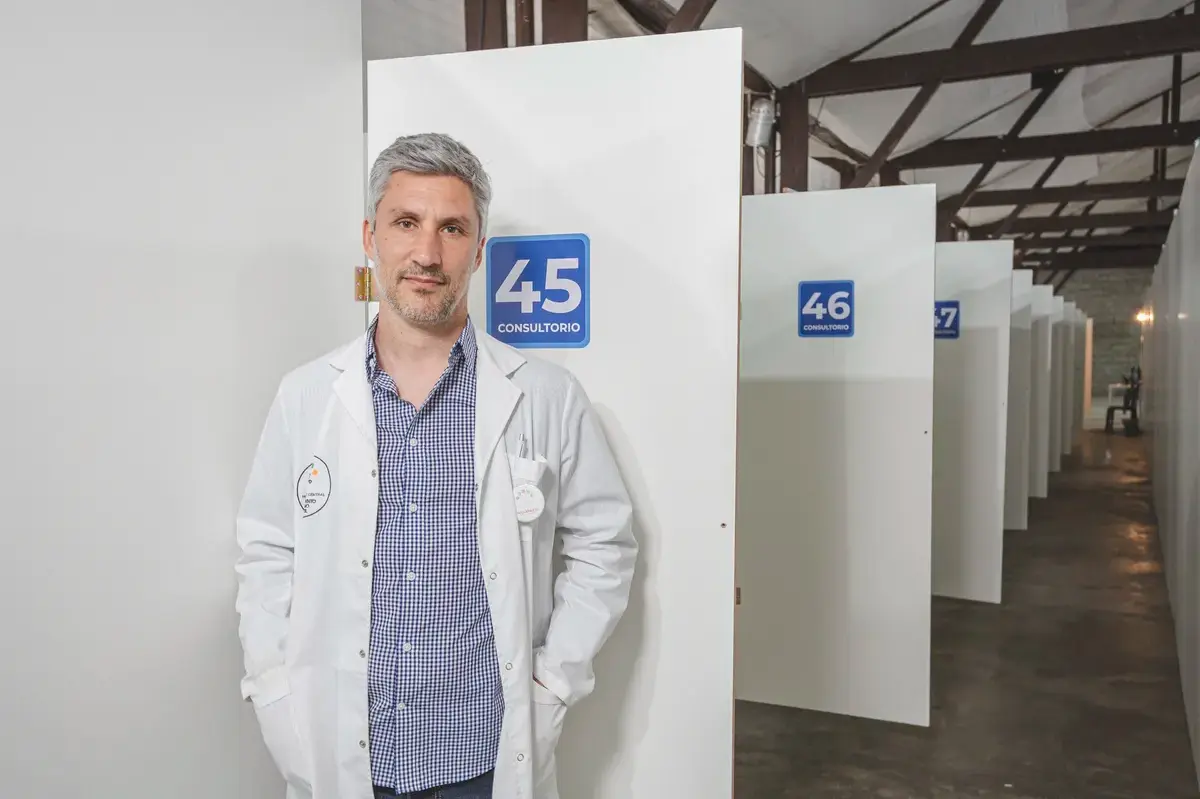
One part of the study was done at the Central Military Hospital, where the drug was tested on more than 7,000 volunteers over the age of 60.
The U.S. laboratory Pfizer announced today that the vaccine it developed against respiratory syncytial virus (RSV) is 85.7% effective in preventing the development of severe forms of the disease. It is the first to achieve this degree of effectiveness and if it is approved by the Food and Drug Administration (FDA), the U.S. regulatory agency, it will also be the first drug in the world to combat RSV.
The pharmaceutical company announced the findings of the Phase 3 clinical trial of its research conducted in adults over 60 years of age, the population most affected by the disease. The virus affects the lungs and respiratory tract and leads to serious conditions mainly in premature babies or infants and in older adults. One fifth of the research was carried out in Argentina with about 7,000 patients, mainly at the Hospital Militar Central.mainly at the Hospital Militar Central, located in the Buenos Aires neighborhood of Palermo, and at other medical centers in the country. The Argentine researchers described the results as a "historic milestone" that will revolutionize medicine for the control of viruses.
"We are delighted that this first bivalent RSV vaccine candidate, RSVpreF, has been shown to be effective in our clinical trial against this disease, which is associated with high levels of morbidity and mortality in older adults," Annaliesa Anderson, senior vice president and chief scientific officer of Vaccine Research and Development at Pfizer, explained in the release. The drug is bivalent because the research focused on both A and B strains of the virus.
In view of the results, the company will seek regulatory approval from the FDA in the United States within the next three months. In addition to Pfizer there are three companies conducting late-stage trials of their own vaccines: GSK, Johnson & Johnson and Moderna.
In the country
"One-fifth of the global study was developed in Argentina, mainly at the Military Hospital and the network of medical centers associated with the hospital," he told THE NATION Gonzalo Pérez Marc, head of Research and Teaching at the Maternal and Infant Unit of the Military Hospital, and one of the referents of the Pfizer study in Argentina. "It is a worldwide result and achievement after more than 50 years of research trying to find a vaccine against the respiratory syncytial virus. A vaccine with 85.7% efficacy against severe forms of the disease was found," added the researcher.
According to the specialist, Pfizer's development is the first step to control one of the most complicated respiratory viruses to treat. "In Argentina we are finishing the study of this vaccine in pregnant women to prevent bronchiolitis in newborns," he said.
RSV is a catarrhal virus that when it triggers lung disease is usually very serious. It can lead to pneumonia or worsening of heart failure, pulmonary disease, diabetes or other pre-existing diseases in a patient. In children it can lead to bronchiolitis, damage the lungs and cause severe bronchospasm. In premature babies and infants it can cause respiratory failure and even death.
"It's going to change the epidemiology of one of the most important diseases in pediatrics where we pay a lot of attention to viral pneumonias. Although it is unknown to most people, it is one of the worst flus for adults over 60 years of age.. In those people there is no treatment and no way to prevent it.
If you have RSV and a cardiovascular pathology, you are two hundred times more likely to have a heart attack a week," said Pérez Marc. The researcher said that RSV causes a type of disease burden equal to or more serious than Covid and influenza, with the particularity that the disease becomes more dynamic among children. It spreads and circulates like other respiratory viruses through the secretions of infected people.
Pérez Marc worked for two decades together with Romina Libster, Fernando Polack and a very large team in the study of RSV. The researcher referred that since the 1960s the vaccine has been investigated without obtaining positive results so far. A previous vaccine tested had reached 38% efficacy and failed to obtain approval from the regulatory authorities. The researchers believe that, with 85.7% efficacy in older adults, a similar result can be expected in children.
"It is a totally unprecedented efficacy. We are living a revolutionary era in medicine. The possibility of controlling the most common and most serious viruses is becoming a reality and in Argentina we are playing a central role in these milestones," said Pérez Marc.
The rest of the study of the Pfizer vaccine will be carried out with 40,000 people in the world. Of that total, approximately 7500 will be studied in Argentina. To participate as a volunteer, those interested can register on the vaccine development study website.. Once Pfizer submits the application for approval in the United States, Argentine researchers will conduct a one-year safety follow-up of the volunteers.
By Jesús Allende-La Nación
Link to the complete article: