
Three Phase III trials of vaccines against respiratory syncytial virus and one against influenza are being developed at the Military Hospital. Infobae talked to the study leader, Gonzalo Pérez Marc.
Year after year, different seasonal illnesses were responsible for overwhelming health systems. During the winter, bronchiolitis and influenza (before COVID made its appearance) were the main culprits.. Now, with the backing of vaccines in the pandemic, there is no longer any doubt that immunizations are the answer to these pandemics. immunizations are the answer to these pathologies.. Even more so with the new vaccine platforms, such as messenger RNA and recombinant proteins.
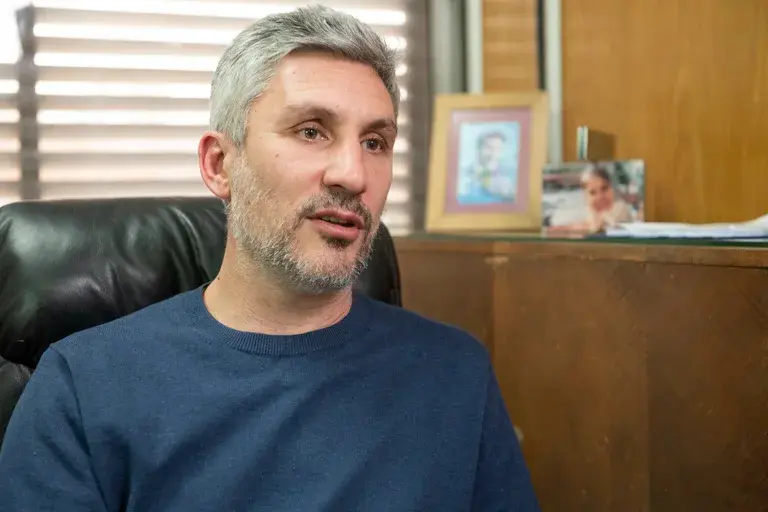
With some 15 thousand volunteers and more than 600 people in the professional staff, Infobae entered the Phase III trials being carried out at the Military Hospital and talked to Gonzalo Pérez Marc, pediatrician (MN 110.813) and Principal Investigator of the studies, to know how the three researches for the syncytial virus vaccine are developing.(MN 110,813), pediatrician and Principal Investigator of the studies, to know how the three researches for the respiratory syncytial virus (RSV) vaccine, responsible for bronchiolitis, and the one against Influenza, responsible for the flu, are developing.
"COVID, RSV and influenza are the three main viruses that, when they cause lung damage, can be very serious," Perez Marc said.
What is RSV: the next target for science
Before we can analyze the reasons behind these vaccines, it is important to know the disease driving the need for these immunizations that are under analysis.
"The respiratory syncytial virus (RSV) is a respiratory is a respiratory virus that affects the lower airways, which are the alveoliwhich are the alveoli, the last place where gas exchange is going to take place: blood is oxygenated and carbon dioxide is gaseous exchange: the blood is oxygenated and carbon dioxide is eliminated.. This small airway, which is the smallest and the lowest because it is in the lungs, is the one that is very much affected by this virus. is the one that is very much affected by this virusvirus, which is well known for being the one that causes the bronchiolitis in children", explained Pérez Marc to Infobae.
In this regard, he recalled the role played by this disease before the pandemic, when during the winter season it caused the "collapse of health systems". "Bronchiolitis is the leading cause of morbimortality from pulmonary infectious disease in the world by far.", said the expert. However, he clarified that the role of RSV in older adults, especially in those over 60 years of age is not very well studied, although the consequences are.
"In older adults, especially in those over 60 years of age.Although it is usually a common viral infection, it can cause an illness that can be very serious at the pulmonary level, as bad as or worse than influenza, which is the common flu. can be very serious at the pulmonary level, as serious or worse than influenza, which is the common flu," he said."he affirmed.
In the words of Perez Marc, "COVID, RSV and influenza are the three main viruses that, when they cause pulmonary damage, can be very serious.. RSV, particularly in older adults, can cause aggravated cardiovascular or respiratory conditions, especially if there are underlying diseases, in a short period of time. And if there is RSV pneumonia, there is a very high chance of an associated infarction or a serious worsening of the respiratory pathology.
With this scenario, the reality shows the importance of generating vaccines to prevent these conditions in older adults, as well as in young children, since it is the "main cause of morbidity and mortality due to viral respiratory disease".main cause of morbimortality due to viral respiratory disease".. "Just as a vaccine has been found for COVID and better vaccines are being developed for influenza, it is very important that we get a vaccine, it is very important that we get a vaccine against RSV, which could change the epidemiology of the world and of pediatrics."he said.
"Today, mRNA and recombinant proteins provide you with technology that you can quickly adapt to new variants and subvariants," Perez said.
He also explained: "There are diseases such as influenza, and it is still to be seen with COVID, that the antibodies do not last as long.. In RSV it is probably that the vast majority of people have had contact with the virus before the age of two years and then multiple contacts throughout life, but the antibodies that one generates are not long term and do not last long; and they are also viruses that mutate".
This is why boosters are needed every year. "With influenza, every year modifications are made to the vaccine to make it the best possible, and different variants are added. Now, they are even quadrivalent. We believe that the RSV model will move towards that".
According to the pediatrician and principal investigator of these trials, "RSV, particularly in older adults, can lead to aggravated cardiovascular or respiratory conditions".
What is the importance of generating new vaccines for "old" diseases?
The pandemic, beyond the somber reality in which it plunged the world, also brought positive points, such as the development of vaccines with high levels of efficacy against severe cases and even infection. development of vaccines with high levels of efficacy against severe disease and even infection.. This situation was kick-started by new platforms, such as messenger RNA and recombinant proteins, which now are now ready to be evaluated against the "old" diseases, such as bronchiolitis and influenza.
"Today, recombinant mRNA and recombinant proteins give you a technology that you can quickly adapt to new variants and subvariants.. So, if you can prove that this technology is effective in other diseases, and not only in SARS-CoV-2, but also in influenza and RSV, you have a very useful tool with a much higher level of efficacy," said the expert.
The reason behind the annual vaccination is related to the fact that "the antibodies that one generates are not long-term and do not last long; and besides, they are viruses that mutate".
He added: "We try to cover vulnerable populations, such as newborns, people with immunosuppression and the elderly, against RSV, as well as influenza and COVID. While vaccines in pregnant women are to cover, above all, newborns so that they are already born with antibodies, because they have immature immunity at birth and it is better if they already have the antibody. Now, the new platforms are starting to be used for the old diseases.".
"In RSV, since the 1960s, no effective vaccine has been achieved because none has exceeded 40%.. I am very optimistic that, with all that has been achieved with mRNA and with the new recombinant proteins, we will be able to have vaccines against RSV, which is much more complex," said Pérez Marc.
"Today, new platforms are starting to be used for old diseases," noted Marc
In that tone, he explained that The virus responsible for bronchiolitis proved to be more complex in the face of the development of vaccines because of a very important detail: what the immune system had to respond to.. To make a parallel, in COVID it was quickly detected that scientists should focus on the now famous Spike protein, but in RSV it could not be detected. These new vaccines explore another "weak point" of the virus.
"The objective of vaccines is to prevent serious disease, but for that you have to be able to find a fraction of that virus that, if you reproduce it with the simulator that is the vaccine, generates a very important immune response so that, when the virus arrives, your body defends you. For years, vaccines were made against a protein that fuses the virus with the cells, but it remained in the post-fusion and the immune responses were not enough. Thanks to new technologies, it was discovered that doing it against the pre-fusion protein is much better because it is more stable and surely your immune response will be much better. That is what we are investigating," the pediatrician explained.
To elaborate on this aspect, the principal investigator pointed out: "The new technologies demonstrated levels of efficacy between 95% and 97%.The new technologies demonstrated efficacy levels of between 95% and 97%, which was unprecedented for this type of vaccine and research, plus against mild disease and against severe disease it was close to 100%. That brought us to a new place".
That is why, according to Pérez Marc, they estimate that "this new generation of vaccines against influenza and RSV will achieve much higher levels of efficacy, but it has to be proven. It is not, 'I am ready to use this platform because it is sure to work well,' because there is no such thing in medicine. We know that with inactivated virus platforms, which are good, simple and have proven to be safe, we have close to 50% efficacy, now we are looking for the next generation of vaccines with new technologies".
"If the efficacy of the flu vaccine is much greater it is more than welcome, but tests are also being done to try to keep needlesticks as few as possible by pooling vaccines from the same platform. If there is one thing we know, and it became crystal clear with the pandemic, it is that vaccines save lives and make a difference. So, first we have to vaccinate again against what we had pending and second we have to continue researching more and better vaccines to be able to better cover a greater number of people against the same or new diseases", he added.
At the same time, he recalled: "With COVID it was said that 60% efficacy is low, but for respiratory viruses it is very high. With the COVID, people said that I should not take this vaccine because it has 70% efficacy, but for influenza it would be the best vaccine of all.".
The pediatrician pointed out that, between the current and ongoing studies, there are more than 20,000 volunteers.
Although each step along the way will be a milestone in itself, Pérez Marc stressed that the ultimate goal is to obtain a vaccine against COVID, bronchiolitis and influenza, although he clarified that the first step is to achieve effective immunization against RSV.However, he clarified that the first step is to achieve an effective immunization against RSV. "Once we have it and it can be adapted to the new variants, then we will put a tick in the box. Then you have the influenza vaccine, which is less effective, and now we are investigating the new generation of influenza vaccines. These are the first ones and we hope they will be effective because logic indicates it. But If you have the same platforms for three different viruses, the next thing is to be able to unite them in the same application: a triple viral vaccine".
"Once you have the three vaccines approved, then you can start doing studies that combine, perhaps, two first and one later, but you end up combining the three. In these studies we can have the efficacy during this year, but then we follow up for two or three years and in some cases up to five years. So, it would not be at all wrong to think that in five years an adult MMR vaccine will be approved because the clinical studies are advancing at the maximum possible speed, always respecting the regulatory and safety steps that have to be taken, but without dead times", he evaluated.
The role of volunteers in science
At several points during the interview, Pérez Marc highlighted the role of volunteers in clinical trials and warned that the Argentines who volunteers in clinical trials and warned that the Argentines who lend themselves to these studies are the ones who provide the most detailed, high quality data for the longest period of time.. It was in this same environment, together with Fernando Polack, where the first study was carried out on national soil for Pfizer's COVID vaccine.
"We have four studies for RSV and one for influenza, which is in addition to other studies we have active. All this means that we have very well-oiled logistics because clinical research is very meticulous in its management, both in the volunteer's circuit and in all the steps and requirements," he said and added: "The clinical study has to have everything recorded, because these data from thousands of people, which one hears about, are very important.The clinical study has to have everything settled, because these data from thousands of people, which sound like a lot to one, end up being applied to billions of people".
"With COVID it was said that 60% efficacy is very low, but for respiratory viruses it is very high," said the expert.
And he recalled: "For the COVID vaccine studies we had to generate a gigantic working group and hyper-specialize, with a very meticulous follow-up. Now, with these new studies added to the previous ones, we will have more than 23,000 volunteers, which would be a similar number to that sought in a complete world study.. We have been audited several times by the sponsors, the companies that conduct the studies, the national and foreign regulatory agencies.
"In terms of personnel, we have more than 1,200 people working here. Today we are between 600 and 850, it fluctuates according to the time of the study, but always with the support of the Military Hospital, the Army and I would even say the country in general, because the Ministry of Health also collaborates through the regulatory agency; and fundamentally the volunteers," he explained.
Moreover, about the Argentine volunteers, he assured that it is thanks to their participation that the national trials have high standards. "I always say it, there are no volunteers like in Argentina, because people go on for years contributing data, participating, coming and complying with everything meticulously," he assured.
"When studies are done in parallel in the United States, Sweden, Finland, Japan, Germany, England, Brazil and Chile, among others, and we do the meetings to compare statistics and sustained participation over time, the Argentines are at the top always. Even when many, in the course of the study, have up to 200 thousand visits. They almost never miss, they bring everything they are asked for and even come with their studies to add the news. One often criticizes the Argentinean and Argentina, but in this I can tell you that we are in this I can tell you that we are one of the best in the world.", he asserted.
On the other hand, with regard to the population groups that could be considered more complex, Pérez Marc emphasized that the predisposition of the elderly, who are now, who are now part of two trials on national soil. "They are the best population there is .For example, they overturned a prejudice that one might have about their behavior with the management of the application on the cell phone and electronic diaries," he said.
"They come with the medications or with the medical history they have, and they are very grateful when they see that the processes are well done and that the care is good. Or they give us constructive criticism and not complaints. It is a pleasure to work with this population, one would think, perhaps, that because of mobility problems or other pathologies, because they do not see well or do not hear well; but they have overcome all these barriers.but they overcame all those barriers," he stressed.
Phase III trial of influenza vaccine to be conducted in those over 18 years of age
Currently, at the Military Hospital, two studies are being conducted for vaccination against RSV in people over 60 years of age, one in pregnant women, and one in people over 18 years of age against the influenza virus. "Against COVID we saw that people were asking to please join the study, but here it is totally different. Today it is much more difficult to get large numbers of people for the studies, We have a network of referrals of volunteers who want to participate, but also links: www.vacuna60.comfor people over 60 and pregnant women and www.argvacunas.comfor influenza", he indicated.
"When people pre-enroll, we call them and explain what the study is like and how it works. We summon them to the hospital, read the informed consent form, which is like a prospectus for the entire study; any doubts are answered and with all that information they say whether they want to participate or not," he said.
During the interview with Infobae, Pérez Marc showed how he organizes the different rehearsals and the way he seeks to optimize each step.
However, he emphasized: "Generally, when people come, they are more convinced to participate. In clinical research we always say that for people to have confidence we have to provide a lot of information and answer doubts. In any case, in research before and after and always prioritize the volunteer's health.".
"Today, in one RSV study we already have 6,000 people and we can go up to 9,000; while in the other we can go up to 6,000. In the case of influenza we can do up to 600 people, it is a 'small' study worldwide," he pointed out. The reasons for these numbers lie in how much each virus circulates: the more widespread it is, the fewer the number of people who need to be evaluated for new immunizations. for the new immunizations.
While in the case of trials is performed vaccine versus placebo, where it already has an immunization that was shown to be effective, it is performed in relation to the best immunization that exists on the market. "If you know that the vaccine you are using as a comparator is already good and generates 'so much' level of antibodies, when you compare it with the new one you seek to detect that it generates the same or better level of antibodies, beyond the efficacy, and that validates it".
Now, in the case of the pregnant women, who are the ones who put the arm, the baby will be the one evaluated. "In addition to the Military Hospital, in the City of Buenos Aires, we are doing it in different provinces and centers, such as Salta, Mar Plata and Tucumán, among others: Salta, Mar de Plata and Tucumán, among others. The idea is to be able to have a varied population of the Argentine Republic, which allows you not only to know if these vaccines are effective but also their behavior in our population".
"Here, you follow the mother when she is vaccinated and, once she is born, you follow the child for a year. you follow the mother when she is vaccinated and, once she is born, you follow the son or daughter for a year..... These are longer studies because you don't look for efficacy immediately, but at the end of the study. We are closing enrollment worldwide in the next few days, so all pregnant women in the third trimester who want to participate can contact us, make it clear that they want to participate in the study of pregnant women and we will contact them. The idea is to finish the enrollment during these months and have the results the following year. This would really be something very relevant, which would change the history of pediatrics."he said.
While in the case of monoclonal monoclonal treatmentPérez Marc explained that it is intended for "newborns for "newborns, premature babies or children who have not yet had their first winter season".. That is to say, they have not had the possibility of being in contact with RSV. In Argentina, it is already used and is one of the treatments applied by the national government, but with several applications. This monoclonal, instead of several applications, is given in only one and has a better potency, but this has to be tested", he stated.
What lessons the pandemic has taught us
Although the pandemic is still present, there are some aspects that after two years can be put in the "scientific balance". One of them is the speed that was achieved in clinical studies.. They showed that it is not necessary to wait decades, with dead times in between, to know how effective a drug or a vaccine is, especially when these drugs can save lives all over the planet. As long as all the necessary safety steps are followed.
"From the pandemic I am left with the proven conviction that vaccines save lives and that scientific research, when there is political will, investment and active community participation, is much better, faster and more efficient. and that scientific research, when there is political will, investment and active participation of the community, is much better, faster and more efficient, and that is very important," he said.
"In clinical research before and after and always prioritizes the health of the volunteer," said the expert.
At the same time, he highlighted the "level of world connectivity that we have, we thought it was much lower but this showed us that if we do not work together all the countries it is very difficult to stop a situation like the one we had. With which, we should rethink the role and support that the World Health Organization should have so that it can encompass and recommend common responses and coordinate between different nations.".
"Another point we should look at is: what did we learn, to be able to look back next year or the year after or a couple of years and say what were the best strategies we should use in each place, with their particularities and from different aspects. what were the best strategies that we should use in each place, with their particularities and from different aspects. And, on the other hand, the importance of hygienic-dietary measures, but above all hygienic, distancing and care, with the conviction that we should take care of our own health.The pediatrician reflected that it is impossible to take care of oneself if we do not take care of the person next to us".
He continued: "We have to start thinking that the virus that generated this pandemic is already part of everyday life. Now, apparently, it has stabilized in Omicron with all its variants and, fortunately, for this SARS-CoV-2 we already have vaccines and they will probably be established on a regular basis. But Africa is still a question mark for everybody and there is no concern on the part of the global community.. There is a whole continent and also other regions of the world that remain vulnerable against both malaria and SARS-CoV-2 and other diseases. It is a wake-up call, we have seen everything that happened and we should be able to prevent a little bit more."
"We know that vaccines save lives and we verify it, but applied in time and form, we know how the boosters against COVID have to be and we know that populations require one more, but we have to comply with all the doses, not only with the first two. We have to be very emphatic that people must continue to be vaccinated against SARS-CoV-2 and complete the National Vaccination Calendar, as indicated by the National Ministry of Health."he reiterated.
While the last reflection was dedicated to the informationwhich was greatly affected during the pandemic. "Before, one was not attentive to everything that happened in science if one was not a doctor or a researcher. Today everyone is very attentive, so we have to be very clear: every new information that appears about a disease does not mean that there will be a pandemic. Nor that this first information is the reality of what is happening, I think it is always better to have more information, but you also have to know how to manage it. So it is important that people It is important that people seek information from their family doctors or by reading the media with people specialized in this type of scientific dissemination. It is good for the population to be nourished with information that is already mediated by journalists who are dedicated to these topics."concluded Perez Marc.
By Romina Cansler-Infobae
Link to the complete article: